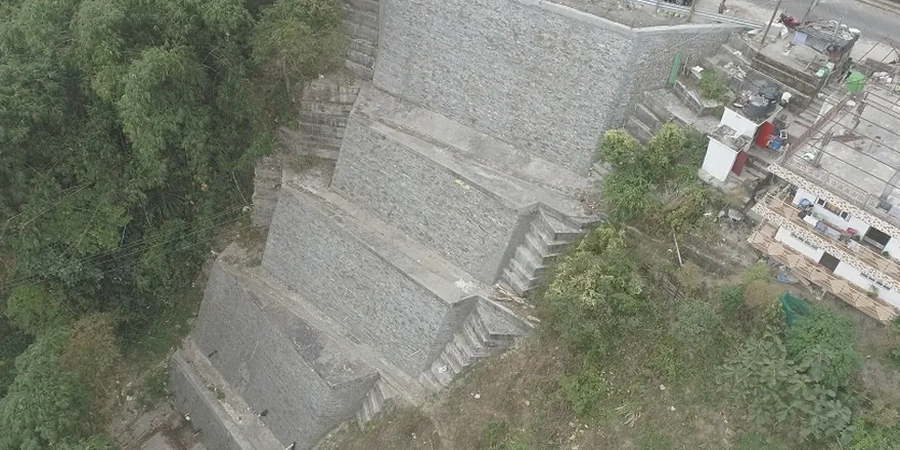
Slope and wall engineering in Laval, Québec, encompasses the analysis, design, and stabilization of natural and constructed earth structures to ensure long-term geotechnical safety. This category covers everything from steep natural slopes along the Rivière des Prairies to engineered retaining walls supporting residential and commercial developments. Given Laval's rapid urban expansion onto sensitive clay and till deposits, the importance of robust slope and wall solutions cannot be overstated. Professionals in this field combine geotechnical investigation with structural design to mitigate risks of landslides, erosion, and foundation distress, protecting both property and public safety.
Laval's geotechnical landscape is dominated by the Champlain Sea clays, which are notoriously sensitive and prone to retrogressive landslides when disturbed. These post-glacial deposits, often overlain by granular fill or weathered crust, present unique challenges for slope stability. Groundwater fluctuations, particularly during spring thaw and heavy rainfall, further reduce effective stress in these soils. In hillside areas like Sainte-Dorothée or along the Mille Îles River, natural slopes can reach critical angles, requiring detailed slope stability analysis to evaluate factors of safety and failure mechanisms before any construction begins.
Regulatory compliance in Laval falls under the Québec Building Code (Chapter I, Building) and relevant CSA standards such as CSA A23.3 for concrete design and CSA S6 for highway structures. Municipal bylaws, including Laval's zoning and excavation regulations, often mandate geotechnical reports for projects near slopes greater than 20% or within setback zones. For retaining structures exceeding 1.2 meters in height, professional engineer certification is required. Design must account for seismic considerations per the National Building Code of Canada, with Laval assigned a seismic hazard value that influences wall reinforcement and anchor requirements. Environmental permits from the MELCCFP may also apply when working near watercourses.
Projects requiring slope and wall expertise range from residential foundation retention on sloping lots to major infrastructure works like the widening of Autoroute 440. Retaining wall design is critical for commercial developments along Boulevard des Laurentides, where grade changes maximize usable space. Where space constraints or high loads demand deeper stabilization, active/passive anchor design becomes essential, providing lateral resistance for sheet pile walls or stabilizing existing slopes without extensive excavation. These solutions are also vital for shoreline protection along Laval's numerous riverfront properties, combating erosion while preserving ecological integrity.
Common indicators include tension cracks in the ground or pavement, tilting trees or fence posts, soil bulging at the toe of a slope, and sudden changes in drainage patterns. In Laval's sensitive clays, small initial cracks can rapidly propagate, so any of these signs warrant immediate professional assessment to prevent a retrogressive failure.
A retaining wall becomes necessary when space constraints prevent a stable natural slope angle, when grade changes exceed 1.2 meters, or when protecting structures near the crest or toe. Laval's zoning and building code often mandate engineered walls for slopes steeper than the soil's angle of repose, particularly in clay-rich areas.
Laval's Champlain Sea clays exhibit low shear strength and high sensitivity, requiring careful anchor bond length calculations and corrosion protection. Active anchors in these soils must account for creep potential, while passive systems often rely on deeper till or bedrock for reliable capacity, making thorough site investigation essential.
Permits generally include a municipal excavation or construction permit from Ville de Laval, and a professional engineer's sealed geotechnical report. Work near watercourses requires a certificate from MELCCFP under the Environment Quality Act. For slopes affecting public infrastructure, additional right-of-way and environmental permits may apply.