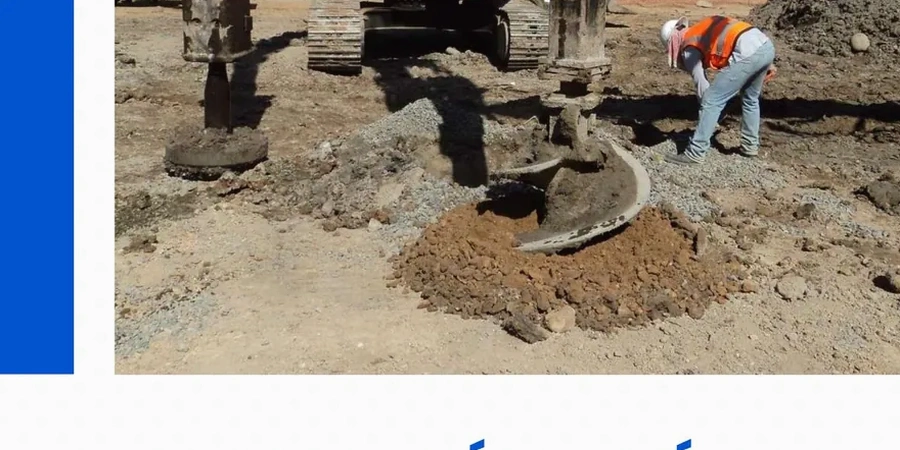
Ground improvement in Laval represents a critical branch of geotechnical engineering focused on modifying the physical properties of native soils to support safe and durable construction. This category encompasses a suite of techniques designed to increase bearing capacity, reduce settlement, and mitigate liquefaction potential in the loose, compressible deposits that characterize much of the region. For developers and civil engineers working on Île Jésus, understanding the necessity of soil enhancement is not merely a technical checkbox; it is a fundamental risk-management strategy that directly influences project feasibility, long-term structural integrity, and compliance with stringent provincial safety standards.
The geological context of Laval is dominated by the Champlain Sea clay belt, a legacy of post-glacial marine inundation. Much of the city is underlain by thick sequences of sensitive silty clays interbedded with loose alluvial sands and silts. These soft, normally consolidated clays are notorious for their low shear strength and high compressibility, while the granular layers, often found in a loose state, are susceptible to significant densification under dynamic loading. The presence of this challenging stratigraphy means that conventional shallow foundations are frequently inadequate for any structure imposing substantial loads or requiring strict settlement control, making advanced ground improvement a prerequisite rather than an option for most major commercial, industrial, and infrastructure projects.
Regulatory compliance in Laval is governed by the Quebec Construction Code, which mandates adherence to the National Building Code of Canada (NBC) with provincial amendments, alongside the rigorous geotechnical requirements of CAN/CSA-S6 for bridges and highway structures. Crucially, the design and execution of ground improvement must align with the Canadian Foundation Engineering Manual (CFEM) principles and the specific seismic hazard assessments outlined in the NBC, given Laval's moderate seismicity. All improvement schemes must be validated through comprehensive post-treatment testing, such as cone penetration tests (CPT) or pressuremeter tests, to demonstrate that performance criteria for bearing capacity and total and differential settlement are achieved before construction proceeds, ensuring public safety and asset longevity.
The types of projects that routinely necessitate these sophisticated interventions are diverse and high-stakes. Large-footprint commercial warehouses and distribution centers, which Laval's economy increasingly relies upon, demand uniform, high-strength subgrades to prevent differential settlement that could crack floor slabs. Multi-story residential towers and mixed-use developments require deep improvement to transfer loads safely through the weak crust into more competent strata. Critical infrastructure, including bridge approaches, wastewater treatment plant expansions, and roadway embankments over compressible soils, depends on methods like stone column design to provide both reinforcement and drainage, or vibrocompaction design to densify clean sands and mitigate the risk of earthquake-induced liquefaction. Each technique is selected based on a rigorous analysis of the specific soil profile and project loading conditions.
The primary objectives are to increase the bearing capacity of weak Champlain Sea clays and loose sands, minimize total and differential settlement under structural loads, and mitigate the risk of soil liquefaction during seismic events. These processes transform otherwise unsuitable ground into a stable, code-compliant foundation medium for safe construction.
A comprehensive geotechnical investigation, including boreholes and cone penetration tests, is essential. If the report reveals soft, compressible clays or loose sands with SPT N-values below code thresholds, and settlement analyses predict movements exceeding your structure's tolerances, then ground improvement becomes a mandatory design requirement to ensure long-term performance and safety.
Yes, all ground improvement work must comply with the Quebec Construction Code, which integrates the National Building Code of Canada. Designs follow the principles of the Canadian Foundation Engineering Manual (CFEM), and seismic considerations must meet NBC 2020 requirements. Post-treatment verification testing is mandatory to validate that the specified performance criteria have been achieved.
The process begins with a detailed geotechnical site characterization. Following this, specific improvement methods are selected and modeled analytically, often using finite element software, to predict performance. A detailed design is then produced, specifying installation parameters, quality control testing (like CPT or load tests), and acceptance criteria, all tailored to the local soil stratigraphy and project loads.